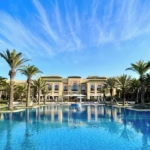
Have you just landed at Casablanca’s Mohammed V International Airport? The thrill of Morocco awaits. But instead of staying in the bustling economic capital, you’re heading northeast to something special. Meknes—the forgotten imperial city, the Versailles of Morocco, the hidden gem that even seasoned travelers often overlook.
And honestly? You’ve made the right choice.
The journey from Casablanca airport to Meknes isn’t just a transfer. It’s your first taste of Morocco’s diverse landscapes. From the Atlantic coast through rolling hills of olive groves, past Roman ruins that predate the Sahara sands, you’ll watch Morocco unfold through your window.
This comprehensive guide covers everything: transport options with real pricing, top attractions in both cities, where to eat and stay, and insider tips that’ll make your trip smoother. Let’s turn your airport arrival into the start of an unforgettable Moroccan adventure.
Why Travel from Casablanca to Meknes?
Most tourists rush from Casablanca straight to Fes or Marrakech. They zip past Meknes on the highway, unaware they’re missing one of Morocco’s most authentic imperial cities. But not you.
Meknes offers something rare in Morocco’s tourist circuit: breathing room. The medina here isn’t a high-pressure sales gauntlet. The souks feel local, not touristy. And the hospitality? Warmer because they’re genuinely happy to see visitors who’ve chosen their city.
Here’s why this route deserves your attention:
- UNESCO World Heritage status – Meknes joined the list in 1996, preserving its 17th-century imperial grandeur
- Half the crowds, double the charm – Unlike Marrakech’s frenzy, Meknes moves at a relaxed pace
- Perfect base for day trips – Roman Volubilis and holy Moulay Idriss are just 30 minutes away
- Budget-friendly – Hotels and restaurants cost significantly less than Fes or Marrakech
- Authentic cultural experiences – The Saturday souk remains genuinely local
The journey itself covers roughly 230 kilometers (143 miles) and takes 2.5 to 4 hours depending on your chosen transport . You’ll traverse the fertile Gharb plain, pass through historic towns, and gradually trade coastal humidity for the crisper air of the Middle Atlas foothills.
Casablanca Mohammed V International Airport: First Impressions
Before heading to Meknes, let’s talk about where you’ve landed. Mohammed V International Airport (CMN) serves as Morocco’s primary aviation hub. It’s modern, efficient, and surprisingly navigable for first-time visitors.
Airport Facilities You’ll Actually Use
Currency exchange – Multiple bureaux de change operate in arrivals. Rates are standardized, so don’t shop around. Skip the airport ATMs if your home bank charges fees—withdraw in the city instead.
SIM cards – Inmed, Orange, and Maroc Telecom have kiosks in the arrivals hall. A 10GB data package costs around 100 dirhams ($10). Do this immediately—having data transforms your travel experience.
ATMs – Plenty available, but note: some charge high fees. Attijariwafa Bank and BMCE typically offer better rates.
Lounges – If you have a long layover, the Pearl Lounge in Terminal 1 offers showers, food, and quiet space. Priority Pass accepted.
Transportation desk – Official grand taxi counters operate 24/7. Prices are regulated, so you won’t overpay.
Travel Options & Pricing: Getting from Casablanca Airport to Meknes
Now for the practical part. How exactly do you cover those 230 kilometers? Let’s break down every option, from budget buses to luxury private transfers.
Private Transfer (The Premium Choice)
Perfect for: Families, groups of 3-6, anyone with lots of luggage, or travelers who value comfort over saving a few dirhams
A private transfer picks you up directly outside arrivals. Your driver holds a name sign, helps with bags, and handles the entire journey while you relax or nap. This is door-to-door service at its finest.
Available vehicles through Sinai Taxi:
| Vehicle Type | Passengers | Luggage | Price Range (USD) | Best For |
|---|---|---|---|---|
| Economy Sedan | 3 | 3 suitcases | $155-$175 | Couples, solo travelers with gear |
| Comfort Minivan | 6 | 6 suitcases | $200-$235 | Families, friend groups |
| Luxury Vehicle | 3 | 3 suitcases | $235+ | Business travelers, special occasions |
Travel time: 2.5 to 3 hours depending on traffic
Amenities: Air conditioning, English-speaking driver, bottled water, hotel drop-off in Meknes
Pros: Zero stress, flexible departure time, can request stops for photos or bathroom breaks
Cons: Most expensive option
Train (The Scenic Choice)
Perfect for: Budget-conscious travelers who enjoy train journeys, solo adventurers, those arriving during daytime
Morocco’s ONCF trains are comfortable, air-conditioned, and punctual. From the airport, you’ll first take the airport shuttle train to Casa Voyageurs station (30 minutes, 50 dirhams), then transfer to a Meknes-bound train .
| Departure (Casa Voyageurs) | Arrival (Meknes) | Duration | Class Options |
|---|---|---|---|
| 06:40 | 10:55 | 4h 15m | 1st/2nd class |
| 08:30 | 11:45 | 3h 15m | 1st/2nd class |
| 11:30 | 14:45 | 3h 15m | 1st/2nd class |
| 14:30 | 17:45 | 3h 15m | 1st/2nd class |
| 17:30 | 20:45 | 3h 15m | 1st/2nd class |
- 2nd class: $15-$19
- 1st class: $21-$39
Travel time: 3-4 hours total including the airport connection
Amenities: Air conditioning, bathrooms, snack trolley, power outlets in 1st class
Pros: Relaxing, room to walk around, scenic views, reliable schedules
Cons: Requires taxi or walk from Meknes station to your final accommodation
Pro tip: Book 1st class for the journey. The extra few dollars guarantee a reserved seat and more space—worth it after a long flight .
Grand Taxi (The Local Experience)
Perfect for: Adventurous travelers, those who’ve experienced Moroccan transport before, budget travelers with minimal luggage
Shared grand taxis are an institution in Morocco. These aging Mercedes sedans carry six passengers and depart when full. From Casablanca, they leave from the Ouled Ziane neighborhood .
Price: Around 100-150 dirhams per person ($10-$15)
Travel time: 2.5-3 hours
What to expect: Squeezed between strangers, potentially no air conditioning, loud Arabic music, and frequent cigarette breaks. It’s authentic. an experience. not for everyone.
Pros: Cheap, frequent departures, direct point-to-point
Cons: Cramped, uncomfortable for tall travelers, no set schedule, limited luggage space
If you try this: Negotiate the total price before getting in. Specify you want the front seat if you’re tall. Keep small bills handy.
Bus (The Budget Choice)
Perfect for: Ultra-budget travelers, those arriving at awkward hours when trains don’t run
CTM and Supratours run comfortable coaches from Casablanca to Meknes . The bus station in Casablanca isn’t near the airport, so you’ll need a taxi there first (150-200 dirhams).
- Standard bus: $8-$10
- CTM bus: $26
Travel time: 3-4 hours
Amenities: Air conditioning, sometimes WiFi, luggage storage underneath
Pros: Cheapest option, reliable companies
Cons: Station transfers add time and cost, less comfortable than trains
Which Option Should You Choose?
Book the private transfer from Casablanca airport to Meknes if:
- You’re arriving after dark (trains stop running)
- You have more than one bag per person
- You want door-to-door service with zero hassle
- You’re traveling with family or in a group
- This is your first time in Morocco
Take the train if:
- You arrive between 6 AM and 6 PM
- You enjoy train travel and people-watching
- Your Meknes riad is near the train station
- You’re on a mid-range budget
Consider the grand taxi if:
- You’ve done this before and know what to expect
- You’re traveling very light
- You speak some French or Arabic
- You’re on a tight budget and adventurous
Best Attractions in Casablanca (Before You Leave)
Even if you’re heading straight to Meknes, consider spending a few hours in Casablanca. The city rewards curious travelers with architectural gems and coastal charm.
Hassan II Mosque
This is non-negotiable. The Hassan II Mosque ranks as the world’s 7th largest mosque, with the tallest minaret on Earth (210 meters) . Partly built over the Atlantic Ocean, it seems to float during high tide.
Why visit: The guided tours (100 dirhams) take you inside a space that holds 25,000 worshippers. The carved wood ceilings, zellige tilework, and retractable roof will leave you speechless.
- Non-Muslims can only enter on guided tours
- Tours run at 9:00, 10:00, 11:00, and 14:00 (check seasonal variations)
- Dress modestly—shoulders and knees covered
- Arrive 30 minutes early for tickets
- The oceanfront setting photographs best in late afternoon
La Corniche
The seaside promenade stretches for kilometers along the Atlantic. Whitewashed buildings, palm trees, and crashing waves create a Mediterranean-meets-Atlantic vibe .
What to do: Walk, jog, sip coffee at a beachfront cafe, or just watch the waves. The Corniche offers Casablanca’s most relaxed atmosphere.
Best photo spot: Near the Hassan II Mosque, where the ocean frames the minaret perfectly.
Rick’s Café
Yes, it’s touristy. Yes, it’s a movie replica rather than the original. But walking into Rick’s Café still feels magical . Built to recreate the famous scene from “Casablanca,” this bar and restaurant transports you to 1940s Hollywood.
Visit strategy: Stop for a drink at the bar rather than dining. Reservations essential for dinner, but the bar welcomes walk-ins .
The Habous Quarter
Built by the French in the 1930s, this neighborhood blends traditional Moroccan architecture with French colonial planning . It feels like an idealized version of a medina—clean, organized, and photogenic.
Shop for: Ceramics, leather goods, traditional clothing without the medina pressure.
Mohammed V Square
The city’s main square features Art Deco buildings, fountains, and hundreds of pigeons . It’s where Casablanca’s French colonial past meets modern Moroccan life. Grab a bench and watch the city swirl around you.
Best Restaurants & Hotels in Casablanca
If you’re overnighting in Casablanca, here’s where to eat and sleep.
Where to Eat in Casablanca
La Sqala
Tucked within 18th-century Portuguese ramparts, this garden restaurant serves exceptional Moroccan cuisine. The setting—fountains, orange trees, candlelit tables—feels magical. Order the pastilla and lamb tagine.
Rick’s Café
The food matches the atmosphere: international cuisine with Moroccan touches. Live piano music nightly. Pricey but memorable.
Central Market (Marché Central)
For lunch, head to the seafood section. Buy fresh fish from the market stalls, then take it to an adjoining restaurant for grilling (20 dirhams per kilo). This is Casablanca’s most authentic culinary experience.
La Bodega
Spanish tapas in a lively setting. Great for groups, with shared plates and pitchers of sangria.
Where to Stay in Casablanca
Casablanca Marriott Hotel
Located in the city center, this hotel offers reliable comfort, excellent service, and a rooftop pool. Status holders appreciate the executive lounge access.
Hotel Transatlantique
A classic choice on the Corniche with affordable ocean-view rooms. The colonial architecture and sea breezes make this special.
Ibis Casa Voyageurs
Perfect for airport connections. Located right next to the train station, it’s practical, clean, and budget-friendly.
Riads in the Old Medina
For authentic charm, consider Riad Yacout or Riad des Artistes. Both offer traditional architecture with modern comforts, though the medina location means navigating narrow streets.
Best Attractions in Meknes
Now for the main event. Meknes rewards visitors with imperial grandeur, peaceful medina wandering, and some of Morocco’s most impressive historical sites.
Bab Mansour
Considered Morocco’s most beautiful gate, Bab Mansour dominates the grand entrance to the imperial city . Completed in 1732, it features stunning zellige tilework, carved cedar, and marble columns reportedly taken from the Roman ruins at Volubilis.
Why it’s special: The scale is breathtaking—the gate towers over Place El Hedim, Meknes’s main square. The intricate tile patterns reward close inspection.
Best time to visit: Late afternoon, when the golden light illuminates the tiles. The gate faces west, making sunset particularly magical .
Mausoleum of Moulay Ismail
This is something special: one of the few religious sites in Morocco where non-Muslims can enter . The mausoleum honors Sultan Moulay Ismail, the warrior-king who made Meknes his capital and built its most impressive monuments.
What you’ll see: Three courtyards lead to the tomb chamber, each more elaborately decorated than the last. The zellige tilework, carved stucco, and painted cedar ceilings represent Moroccan craftsmanship at its peak.
Etiquette: Remove shoes before entering. Dress modestly. Photography is permitted in outer courtyards but not inside the tomb chamber .
Heri es-Souani (The Royal Granaries)
These massive structures once stored grain and fodder for the sultan’s 12,000 horses . The engineering impressed even French architects centuries later—the thick walls and underground water channels kept temperatures cool enough to preserve grain for decades.
What to see: The soaring vaulted chambers, now roofless, create dramatic light and shadow. Explore the adjacent stable complex and the massive Agdal Basin, an artificial lake that supplied water to the royal city.
Best time: Morning or late afternoon for photography. Midday sun creates harsh shadows.
Place El Hedim
Meknes’s main square serves as the city’s living room . Smaller and more relaxed than Marrakech’s Jemaa el-Fnaa, it still buzzes with storytellers, snake charmers, food stalls, and local families.
What to do: Grab a terrace seat at Café Opera and watch the world go by. Visit in the evening when the square comes alive with food vendors and entertainers.
Volubilis (Day Trip)
Just 30 kilometers north of Meknes lies Morocco’s most spectacular Roman ruin . Volubilis was a thriving Roman city, later a medieval settlement, and now a UNESCO World Heritage site.
Why you must go: The mosaics. Unlike many Roman sites where mosaics are removed to museums, Volubilis preserves dozens in situ. The Labors of Hercules, the Four Seasons, and the Nine Dolphins remain exactly where Roman feet walked 2,000 years ago.
- Grand taxi from Meknes: 100-150 dirhams (includes waiting time)
- Organized tour: Available through hotels
- Rental car: 30-minute drive, well-signposted
Entry fee: 70 dirhams
Time needed: 2-3 hours minimum. Combine with nearby Moulay Idriss for a full-day excursion.
Bou Inania Madrasa
Tucked within the medina’s souk streets, this 14th-century Islamic school showcases Marinid architecture at its finest . The intricate tilework, carved plaster, and cedar screens reward careful exploration.
Don’t miss: Climb to the roof for panoramic views across the medina. The green-tiled rooftop offers a different perspective on the city.
Dar Jamai Museum
Housed in an 1882 palace, this museum displays Moroccan arts and crafts in a setting that’s itself a masterpiece . The Andalusian garden alone justifies the entry fee—a peaceful oasis of orange trees and fountains.
Collections: Ceramics, jewelry, woodwork, and traditional costumes from the Meknes region.
Moulay Idriss (Day Trip)
Perched on two hills overlooking Volubilis, this whitewashed town ranks among Morocco’s holiest sites . Moulay Idriss I founded the Idrisid dynasty that ruled much of Morocco. For centuries, non-Muslims couldn’t enter. Today, everyone’s welcome.
What to do: Climb to the hilltop shrine for sweeping views. Wander the steep, photogenic streets. Visit the mausoleum (exterior only for non-Muslims).
Combine with: Volubilis for a perfect day trip.
Souk Shopping in Meknes
Unlike Fes or Marrakech, Meknes’s souks feel relaxed and genuine . Vendors haggle, but without the aggressive pressure. Saturday market day brings farmers from surrounding villages, creating a colorful spectacle.
What to buy:
- Olive wood carvings (the region produces excellent olive wood)
- Berber carpets (better prices than tourist centers)
- Pottery (Meknes has a strong ceramics tradition)
- Local olives and olive oil
Haggling tip: Offer half the initial price, then negotiate to around 60-70% of the asking price. Keep it friendly and smile .
Best Restaurants & Hotels in Meknes
Where to Eat in Meknes
Restaurant Palais Ismailia
Set in a restored palace, this restaurant serves traditional Moroccan cuisine in elegant surroundings. The pastilla here is exceptional—sweet, savory, and perfectly flaky. Try to book a rooftop table for views over the medina.
Restaurant Zitouna
Located near the medina, this spot offers solid Moroccan classics at reasonable prices. The lamb tagine with prunes consistently impresses.
Ya Hala
A local favorite near Bab Mansour. Simple, honest Moroccan food with friendly service and no tourist markup.
La Hacienda
For something different, this Spanish-inspired spot serves excellent paella and tapas. A nice break if you’re craving something non-Moroccan.
Street Food at Place El Hedim
Evenings transform the square into an open-air food court. Try grilled meats, snail soup (babbouche), or the ubiquitous merguez sandwiches. Watch your food being cooked over charcoal—it’s half the fun.
Where to Stay in Meknes
Riad Yacout
A beautifully restored riad near the medina. The courtyard garden, plunge pool, and rooftop terrace create an oasis of calm. Rooms feature traditional decor with modern bathrooms.
Riad Idrissi
Located within the medina walls, this riad offers authentic charm at moderate prices. The rooftop views across the city are spectacular at sunset.
Hotel Transatlantique Meknes
A colonial-era hotel in the new city. It’s faded but charming, with high ceilings, old-world atmosphere, and a lovely garden. Great value for budget travelers.
Palais Didi
Luxury meets tradition in this restored palace. The suites are enormous, the service impeccable, and the setting genuinely palatial. Perfect for a splurge.
Ryad Bahia
Mid-range option with beautiful tilework and a central courtyard. Friendly staff and a good location near Bab Mansour make this a solid choice.
Pro Travel Tips for Your Casablanca to Meknes Journey
Best Time to Visit
Optimal seasons: Spring (March-May) and fall (September-November)
During these months, daytime temperatures range from 20-25°C (68-77°F)—perfect for exploring. The light is golden, the crowds moderate, and everything feels fresh.
Summer (June-August): Temperatures regularly exceed 35°C (95°F) in Meknes. Sightseeing becomes an endurance test. If you must visit, start early (8 AM), break midday, and resume in late afternoon.
Winter (December-February): Days are cool (10-18°C) and nights cold. Rain is possible but not constant. Fewer tourists mean lower prices, and the crisp air makes walking comfortable .
What to Pack
- Modest clothing covering shoulders and knees (respect local customs)
- Lightweight scarf (for mosque visits, sun protection, and modesty)
- Comfortable walking shoes (medina streets are uneven)
- Layers (mornings and evenings can be cool year-round)
- Swimsuit (if your riad has a pool)
Essentials:
- Sunscreen (Moroccan sun is strong even in winter)
- Power adapter (European style, two round pins)
- Reusable water bottle (buy bottled water and refill)
- Hand sanitizer and toilet paper (public restrooms often lack both)
- Small bills for tipping and small purchases
Local Customs & Etiquette
Understanding Moroccan culture transforms your experience from tourist to welcomed guest.
Greetings : A handshake suffices for greetings. Between men, expect longer handshakes. Between opposite genders, wait to see if the woman extends her hand first. Learn “Salam Alaikum” (peace be upon you) and the response “Wa alaikum assalam.”
Right hand only : The left hand is considered unclean (used for bathroom hygiene). Eat, pass money, and accept items with your right hand only. This matters more than you’d think.
Photography etiquette : Always ask before photographing people. Many Moroccans, particularly women and the elderly, prefer not to be photographed. A smile and gesture asking permission goes far. The phrase “Nimkin nsowrek?” (can I take your photo?) helps.
Mint tea ritual : Accept mint tea when offered. Refusing can seem rude. Even if you’re not thirsty, take a few polite sips. This gesture of hospitality matters deeply in Moroccan culture.
Ramadan considerations : If visiting during Ramadan, avoid eating, drinking, or smoking in public during daylight hours. Many restaurants close until sunset. Evenings become festive with special meals and celebrations.
Practical Tips
Money matters:
- ATMs widely available in both cities
- Credit cards accepted in upscale restaurants and hotels
- Cash essential for souks, small restaurants, and taxis
- Current exchange: 1 USD ≈ 10 Moroccan dirhams
- Arabic and Berber are official languages
- French widely spoken (Morocco’s second language)
- English understood in tourist areas but not everywhere
- Learn a few phrases: Shukran (thank you), Min fadlak (please), La shukran (no thank you)
Safety :
Morocco is generally safe for tourists, but exercise normal precautions:
- Keep valuables secure in crowded areas
- Use reputable taxis (look for petit taxis in cities)
- Avoid poorly lit areas at night
- Trust your instincts—if something feels off, leave
Tipping:
- Restaurants: 10% for good service
- Guides: 50-100 dirhams for half-day tours
- Hotel porters: 10-20 dirhams per bag
- Bathroom attendants: 2-5 dirhams
Booking Tips
Book private transfers in advance – Especially for airport pickups. Rates are fixed, drivers are vetted, and you’ll avoid arrival stress.
Train tickets – Buy at the station. First-class tickets rarely sell out except on peak travel days.
Ramadan awareness – Check dates before booking. Travel during Ramadan offers unique cultural experiences but requires adjustments.
Friday closures – Many attractions close Friday mornings for prayers. Plan accordingly.
Museum hours – Most sites open 9 AM-6 PM, with lunch closures 12-2 PM. Confirm locally.
Book Your Casablanca to Meknes Transfer Today
Your Moroccan adventure starts the moment you land. Why complicate it with confusing train schedules or cramped shared taxis?
A private transfer from Casablanca Mohammed V International Airport to Meknes gives you:
- A professional driver waiting at arrivals with your name sign
- Door-to-door service directly to your Meknes accommodation
- Comfortable, air-conditioned vehicle with space for luggage
- Freedom to stop for photos or refreshments
- Peace of mind knowing your transport is secured
Whether you’re traveling solo, as a couple, or with family and friends, there’s a vehicle perfectly sized for your group. Economy sedans accommodate up to three passengers. Minivans handle six travelers with luggage. Luxury vehicles add that extra touch of class.
Book your Casablanca airport to Meknes transfer here and start your Moroccan journey relaxed, refreshed, and ready to explore.
Final Thoughts
The journey from Casablanca Airport to Meknes offers more than just transport—it’s your introduction to Morocco’s diverse landscapes and warm hospitality. As the coastal haze clears and the Middle Atlas foothills appear, you’ll feel the transition from arrival to adventure.
Meknes awaits with its massive gates, peaceful medina, and echoes of imperial glory. You’ll wander where sultans rode, bargain where locals shop, and discover why this city deserves its UNESCO status. And when you finally stand before Bab Mansour at sunset, watching the tiles glow golden in the fading light, you’ll know: the detour was worth it.
Safe travels, and welcome to Morocco.
Have you traveled from Casablanca to Meknes? Share your experiences or questions in the comments below!